Introduction
If you’ve spent any time browsing property in Costa Rica, you’ve probably noticed the listings all sound the same: “paradise,” “investment opportunity,” and “steps from the beach. ” None of that tells you much. What actually matters is simpler: which region fits your budget, whether the title is clean, and whether the property can realistically pay for itself if you’re not living in it full-time. This guide walks through all of that, using a real Central Pacific example Villas Cabomar in Puntarenas to show what a solid deal looks like on paper.
What Property in Costa Rica Actually Covers
The phrase gets used loosely, but it spans a wide range: beachfront condos in tourist towns, mountain homes with coffee farms attached, jungle lots with nothing built yet, and turnkey villas that come furnished and ready to rent out. Prices swing just as widely a small condo might run $150,000, while a beachfront estate can easily clear seven figures.
The one thing that doesn’t change much is the legal framework. Foreigners have the same property ownership rights as Costa Rican citizens for almost all residential real estate, which is one reason the country has stayed popular with international buyers for decades, even as prices in some regions have climbed.
Why People Keep Buying Here
A few things come up again and again when you ask people why they chose property in Costa Rica over other Central American markets:
- Political stability. Costa Rica has had no army since 1948 and a long track record of peaceful transitions of power rare in the region.
- Foreign ownership rights. No special visa or residency status is required to buy.
- Tourism that doesn’t quit. Steady visitor numbers support a genuine short- and long-term rental market, not just seasonal spikes.
- Range of climates and lifestyles. Beach towns, cloud forests, cities with real infrastructure it’s not a one-note market.
None of this guarantees a good deal, but it explains why demand for property in Costa Rica has held up better than in a lot of comparable destinations.
How the Buying Process Actually Works
Here’s the short version, stripped of the sales pitch:
- Find a licensed real estate agent and an independent local attorney not the same person, and not someone the seller recommended.
- Run a title search through the National Registry to confirm the property is free of liens and the seller actually owns what they’re selling.
- Sign a purchase agreement and put down an escrow deposit, held by a neutral third party.
- Complete due diligence surveys, water rights, zoning, any outstanding taxes.
- Close through a notary public, who registers the transfer.
It’s a fairly standard process on paper. Where deals go sideways is usually skipped due diligence, not some hidden legal trap.
What to Weigh Before You Buy
A few questions worth answering honestly before you buy property in Costa Rica:
- Is it turnkey or a project? A furnished, rental-ready property in Costa Rica starts earning from day one. An empty lot or a fixer-upper can take years and real money before it pays for itself.
- What’s the actual rental demand in that specific town? A beach two hours from an airport with no local economy behaves very differently than one with an established community and infrastructure.
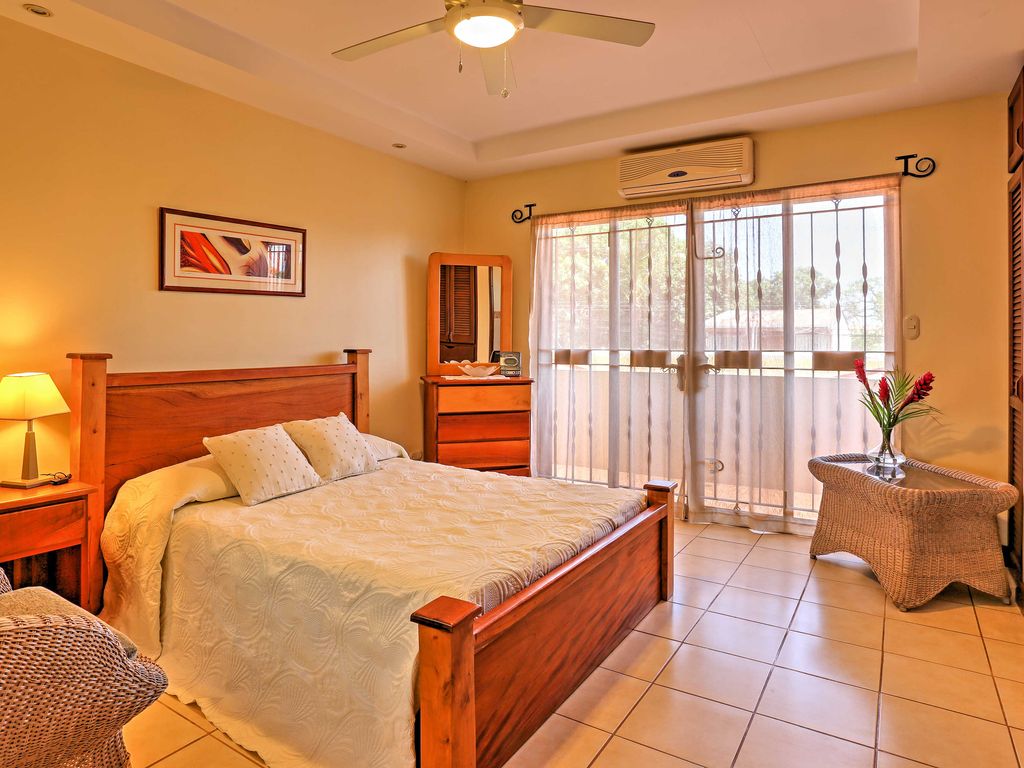
- Does the layout give you flexibility? A property with two independent living spaces like Villas Cabomar’s two-villa setup lets you live in one unit and rent the other, or rent both, without redesigning anything.
- What’s the total cost, not just the sticker price? Property transfer tax, legal fees, and ongoing maintenance all add up, especially for anything near the coast.
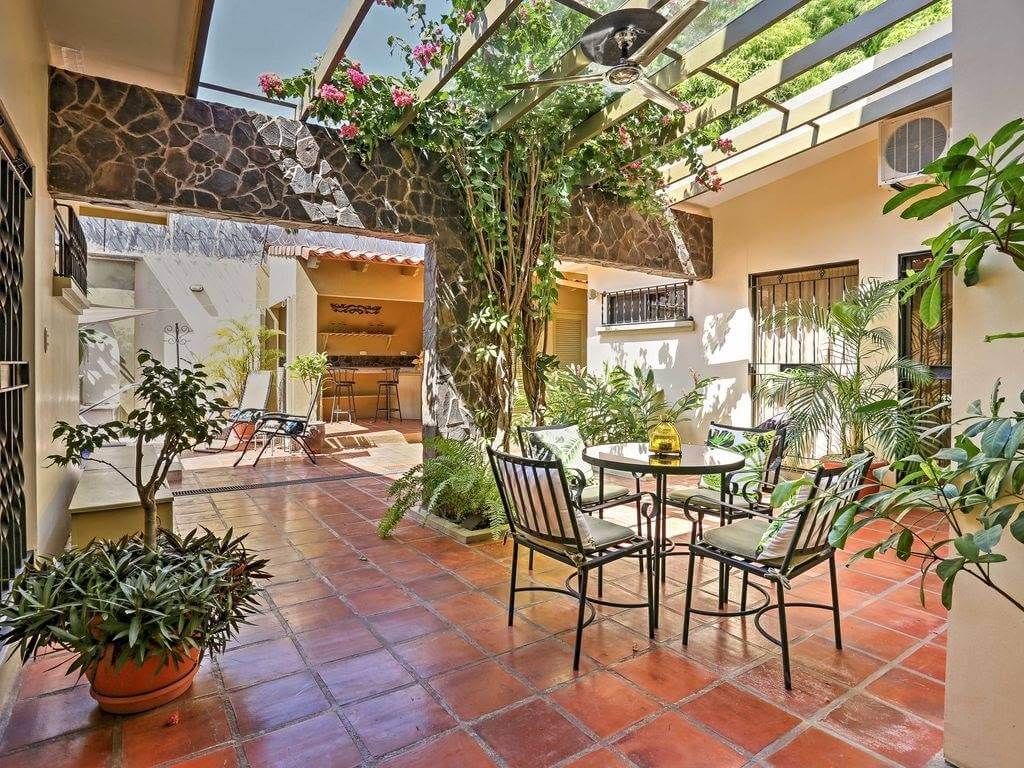
evening of conversation and relaxation surrounded by tropical vegetation. A plunge
pool, wet bar and half-bath add to the comfortable ambiance.
Panama and Nicaragua are sometimes cheaper, but Costa Rica’s:
● simpler ownership laws
● stronger tourism infrastructure
● longer political stability
make it more predictable for buyers who care about rental income.
Within Costa Rica, regional differences matter even more. Jacó and Manuel Antonio are well‑known and priced accordingly. Puntarenas, on the same Central Pacific coast, offers:
● a two‑kilometer beach
● a working cruise port with 70+ ships per year
● access to Nicoya Gulf islands
● noticeably lower entry costs
This is why a $750,000 turnkey property like Villas Cabomar can offer better value per square foot than similar villas in pricier towns.
Before You Commit: Practical Checks
● Hire an attorney independent of the seller’s agent
● Request two years of utility bills
● Review HOA or maintenance records
● Ask for real occupancy numbers from comparable rentals in the same town
These small steps prevent big problems.
Frequently Asked Questions
How much does property cost?
Beachfront condos in tourist hubs often start around $300,000–$500,000. A fully furnished, income‑ready property like Villas Cabomar runs $750,000, furnishings included.
Can foreigners buy property?
Yes, with the same ownership rights as citizens.
Is Costa Rica real estate a good investment?
It can be, especially turnkey properties in areas with established tourism.
Short‑term vs. long‑term rentals?
Long‑term rentals offer stability. Short‑term rentals earn more per night but require more management.
Do I need a real estate agent?
Not legally, but most buyers use one along with an independent attorney.
Final Thoughts
Costa Rica isn’t one market, it’s dozens of micro‑markets. The right choice depends on your goals: living full‑time, renting, or both.
If you want a real example of a turnkey, income‑ready property in a Central Pacific town that hasn’t been priced out, Villas Cabomar illustrates what strong fundamentals look like: two furnished villas, steps from the beach, designed to work whether you move in or rent them out.